<!DOCTYPE html>
Why Your High Desert Energy Bills Depend on a Proper Manual J Calculation
Why Your High Desert Energy Bills Depend on a Proper Manual J Calculation
Phoenix does not forgive guesswork. Summer air hits 115°F. Attic temps run hotter than a parking lot at noon. Cooling systems live hard lives. A proper Manual J calculation draws the line between a calm, cool living room and a unit that guzzles power and fails early. Day & Night Air Conditioning, Heating, & Plumbing treats Manual J as the foundation of every ac installation service Phoenix homeowners and businesses expect to perform under High Desert stress.
Manual J is not a spreadsheet trick. It is an engineering method recognized across Maricopa County by builders, inspectors, and utilities. The result defines the exact cooling load for each home or commercial space in Phoenix, AZ. Without it, systems end up oversized or undersized. Both drive bills higher and shorten equipment life. With it, the system matches the structure, the ductwork, and the microclimate near Camelback Mountain, South Mountain Park, or the North Mountain preserve.
Manual J in Phoenix: What changes in the High Desert
Phoenix sits in the Valley of the Sun. Solar heat gain dominates loads. Attics reach 140 to 160°F. Monsoon humidity swings hit indoor comfort hard. New SEER2 regulations shifted how outdoor units perform under static pressure and duct conditions. Local architecture adds more variables. Arcadia ranch homes use older duct layouts and often have single or double pane windows. New construction in Desert Ridge or Paradise Valley Village includes tighter envelopes, low SHGC glazing, and improved insulation, but rooflines can trap heat if attic ventilation is weak.
Manual J isolates each factor. It looks room by room and sums to a whole-home design load. It tracks orientation, shading, window area, U-values, SHGC, roof reflectivity, infiltration, duct location, and internal gains from people, lighting, and appliances. Without those inputs, an installer guesses and rounds up. Rounding up seems safe but it trades steady humidity control for short, loud cycles. That drives high utility bills in 85032, 85050, and across the North Phoenix corridor.
Day & Night applies Manual J to single-family homes, townhomes, condominiums, and commercial suites. The practice covers split-system central air conditioners, heat pumps, packaged rooftop units on retail spaces near Chase Field, and ductless mini-splits in casitas in Ahwatukee. The process sets the stage for Manual S equipment selection and Manual D duct design so the final system meets SEER2 performance in real conditions, not on a lab bench.
What a Manual J load captures that rules your energy bill
Solar heat gain. Phoenix homes with west-facing glass see sharp afternoon spikes. Arcadia and Biltmore properties with large windows need honest SHGC values and shade factors in the model. Low-E coatings and deep overhangs change the load by hundreds of BTUh per window. Skipping this detail leads to oversizing by a full ton in some cases.
Attic and duct conditions. Most ducts in Phoenix ride in the attic. A leaky trunk in a 150°F attic wastes capacity and roughs up the compressor. Manual J assumes a design duct leakage, then links to Manual D and sealing priorities. Day & Night pressure-tests, seals, and insulates to reduce sensible heat gain in the run. That protection pays back in kilowatt-hours every summer.
Infiltration. Hot, dry air pulls through frame gaps, can lights, and older door sweeps. Monsoon moisture adds a latent load that a short-cycling oversized unit cannot manage. Accurate infiltration data stabilizes humidity and smooths runtime patterns. That feels better at the thermostat and lowers bills because run cycles stay efficient and long enough to wring moisture from the coil.
Internal gains. Cooking near dinner, TV backlights, office gear, and occupancy all add heat. Homes near Phoenix Sky Harbor International Airport can have schedules that vary with shift work. Manual J input accounts for peak occupancy. That prevents under-sizing in a busy household and over-sizing in a quiet condo near the Desert Botanical Garden.
Roof reflectivity and insulation. A white or cool roof in Paradise Valley Village will slash heat flow into the attic. R-38 or better insulation with good coverage breaks the link between roof deck temperature and living zones. Manual J includes these thermal resistances. That may mean a smaller, quieter system with a variable speed blower instead of a larger, single-stage unit that cycles itself to death.
SEER2 and why Phoenix installations demand correct sizing
SEER2 testing changed the scorecard. It reflects real static pressure and duct friction better than older SEER methods. Phoenix installs often face higher static because of long duct runs over garages and bends packed near attic hatches. Poor sizing now shows up faster on a summer electric bill.
With proper Manual J, the selected equipment under Manual S fits the load at design temperature. A variable speed compressor or two-stage system can throttle to match part-load evenings near Moon Valley. A variable speed blower in the air handler holds airflow steady over dirty filters and long supply runs. Those details lock in efficiency even as filters load or vents close in a zoned system. The result is a significant drop in kWh during peak APS or SRP hours.
Symptoms that point to a wrong load or an aging AC
High utility bills without a clear cause. Uneven temperatures by room, especially upstairs or west-facing spaces. Frequent repairs on a unit past 10 years. R-22 refrigerant headaches on equipment built before the phaseout. Hot and cold spots in long ranch layouts or additions that never matched the original duct size. These are the flags Day & Night sees most in Phoenix, Scottsdale, Tempe, Mesa, Glendale, Peoria, Chandler, and Gilbert.
Some homes in 85018 and 85016 run oversized systems from past rule-of-thumb installs. A five-ton swap for a 2,100 square foot Arcadia home looks safe on paper. Manual J with real window data and duct leakage often lands at 3.5 to 4 tons. That one-ton difference shifts the electric bill and moisture levels the first week after replacement. The blower stays in comfort mode longer. The compressor avoids rapid cycling. The coil stays colder, longer, removing humidity during monsoon nights.
What Day & Night measures on-site before any AC installation
Field data matters more than brochures. A NATE-certified technician walks the shell, counts and sizes windows, notes orientation, checks attic insulation coverage, verifies knee walls, reviews shade trees, and documents skylights. The team records the duct layout, supply and return sizes, the air handler location, filter racks, and static pressure. The crew photographs copper line sets, the condenser pad or rooftop mounting details, and the drain pan path to confirm slope and cleanouts. Thermostat location and control type go in the file because a smart thermostat needs the right staging logic to keep ramps smooth on variable speed compressors.
The site visit also checks code requirements and safety. That includes electrical disconnects, breaker sizes, clearances by the Phoenix building code, and roof access for packaged rooftop units near Central Phoenix. The final load and design must meet Arizona ROC standards under ROC #133378. Day & Night documents each step and attaches it to the final proposal so owners can see the why behind the what.
Manual J inputs that move the needle in Phoenix
Manual J uses measured and verified inputs more than assumptions. The following items have the largest swing on the final tonnage for a home from Ahwatukee to North Mountain:
- Window area by orientation with SHGC and U-value verified, plus shading from overhangs or screens
- Attic insulation R-value and coverage, roof color and material, and attic ventilation type
- Duct location, insulation level, and leakage test results tied to Manual D for final friction rates
- Infiltration estimates supported by building age, envelope condition, and blower door data when available
- Occupancy profile and internal gains from cooking, lighting, and home office electronics
Each input reflects Phoenix homes and microclimates. A 1960s Arcadia ranch with block walls and single-pane sliders will compute very different loads than a 2015 Desert Ridge two-story with foamed roof decks and low-E windows. The model respects that reality and outputs a right-sized cooling capacity. That eases compressor strain in July and August when the grid is tight.
From Manual J to equipment: Manual S and the parts that must match
Once the load is set, Manual S selects equipment that hits the load under Phoenix design conditions. That means checking sensible capacity at high outdoor temperatures. A five-ton nameplate does not mean five tons at 110°F with attic ducts and real airflow. The sensible split changes with the coil and blower. Day & Night pairs the right evaporator coil to the condenser, sizes the copper line set per manufacturer tables, and sets blower speeds that maintain recommended cfm per ton. Static pressure and duct friction get measured after install to confirm airflow.
The parts matter. Compressor type drives part-load savings. Variable speed compressors track the load from morning to dusk. Condenser coil design and surface area drive heat rejection when air is calm and hot. Evaporator coil sizing controls latent pickup in monsoon evenings. A variable speed blower supports quiet low-output operation and ramps when afternoons hit peak. Smart thermostats need proper installer setup to stage correctly and avoid short-cycling. Drain pans and traps protect attics and closets from moisture overflow. Mounting pads keep condensers level on gravel or pavers common in Phoenix backyards. Every detail helps the system meet SEER2 ratings under the roof it serves.
Ducts win or lose the season: Manual D aligns the system with the home
Manual J without duct design leaves energy on the table. Phoenix homes often show undersized returns, long runs to back bedrooms, and tight turns at the plenum. That causes static pressure beyond what fans like to see. Blowers then move less air, evaporator coils run cold, and compressors overwork. Fixing returns and sealing ducts before startup often beats a half-ton of equipment oversize.
Day & Night maps the duct layout and uses Manual D to size supply and return lines. The crew balances rooms to smooth out hot and cold spots. A zoned cooling system or a dedicated mini-split can serve a bonus room or a detached office near a pool in North Phoenix. The final as-built gets measured. Static pressure, delta-T, and cfm confirm design targets. That verification keeps the energy bill in line with what the Manual J promised.
Case snapshots from Phoenix neighborhoods
Arcadia, 85018. A 2,100 square foot ranch with west-facing sliders and older ducts. Rule-of-thumb said five tons. Manual J with measured window SHGC, R-30 attic insulation, and duct leakage testing produced a 3.5 to 4 ton load. Final install used a four-ton variable speed heat pump, new return, sealed supply trunks, and a smart thermostat staged for long low-speed runs. Summer bills dropped by about 18 to 25 percent based on prior 12 months. Humidity steadied during monsoon flows. Bedrooms felt even by late afternoon.
Desert Ridge, 85050. A 2,800 square foot two-story with a foamed roof deck. Previous equipment short-cycled at dusk. Manual J found oversized capacity by one ton due to overestimated infiltration. Manual S matched a two-stage condenser to a properly sized coil and variable speed blower. The team adjusted duct design to increase return capacity upstairs. Comfort increased, and the system rode through peak hours with fewer starts. The owner reported a noticeable drop in demand charges.
Ahwatukee foothills, 85044. A multi-level home near South Mountain Park with solar gain on the south side. Window films and shade screens recalculated in Manual J cut peak load. A smaller high-efficiency central air conditioner replaced an aging R-22 unit. The upgraded thermostat managed staging during late afternoon hikes in outdoor temperature. Run cycles grew longer but quieter. Bills improved and the air felt dryer after storms.
Light commercial near Chase Field. A retail suite with a packaged rooftop unit. The old RTU had low airflow due to dirty belts and undersized returns. A Manual J based load with occupancy schedules defined a right-sized SEER2 compliant RTU. A new curb adapter, balanced airflow, and a programmable control strategy stabilized store temperature. Energy use normalized even during game days with door swings and foot traffic.
Equipment classes that fit Phoenix properties
Central air conditioners serve most homes across Phoenix, 85001 to 85085. Heat pumps cut winter gas use in milder months and match well with variable speed fans. Packaged rooftop units sit on many commercial buildings along major corridors and near Phoenix Sky Harbor International Airport. Ductless mini-split installations solve problem rooms, garages converted to offices, and casitas. Zoned cooling systems help large homes with mixed exposures, such as properties in Paradise Valley Village or Moon Valley where elevation and shade vary street by street.
Day & Night sources from brands Phoenix owners know. Trane, Carrier, Lennox, Goodman, Rheem, and York for mainstream systems. American Standard, Daikin, and Mitsubishi Electric for advanced control and high SEER2 performance. For a quiet office or nursery, a Mitsubishi ductless mini-split with inverter control delivers precise temperature and low sound. For whole-home replacements, Lennox and Trane variable speed systems provide steady comfort during long summer afternoons.
Parts and components that protect comfort in 115°F summers
Compressors drive the cycle. Variable speed compressors match load swings from noon to midnight. Condenser coils reject heat even when air is dry and still. Clean coil fins and correct clearances matter near gravel yards. Evaporator coils sized for sensible and latent loads keep humidity under control. Air handlers with variable speed blowers maintain airflow through long runs and dirty filters, which Phoenix homes face during dust storms.
Smart thermostats set stages and schedules in step with APS and SRP peak windows. Copper line sets must match length and diameter for oil return and pressure drop. Drain pans, traps, and PVC runs need slope and accessible cleanouts to avoid attic damage during monsoon spikes. Pads or rooftop mounting systems keep equipment level and secure in storm gusts. These parts seem small, but each ties back to the Manual J and S match. They protect efficiency and system life through July and August.
How Manual J interacts with real Phoenix design temperatures
Manual J uses local design data. Phoenix 1 percent cooling dry-bulb temperatures hover around the low 100s. Many installs see 108 to 110°F design conditions with attic ducts. Humidity averages low, but monsoon periods push latent loads higher. Day & Night uses these values rather than generic assumptions. That is why a central air conditioner sized off square footage alone fails to manage humidity after a dust storm rolls through and dewpoint jumps at dusk.
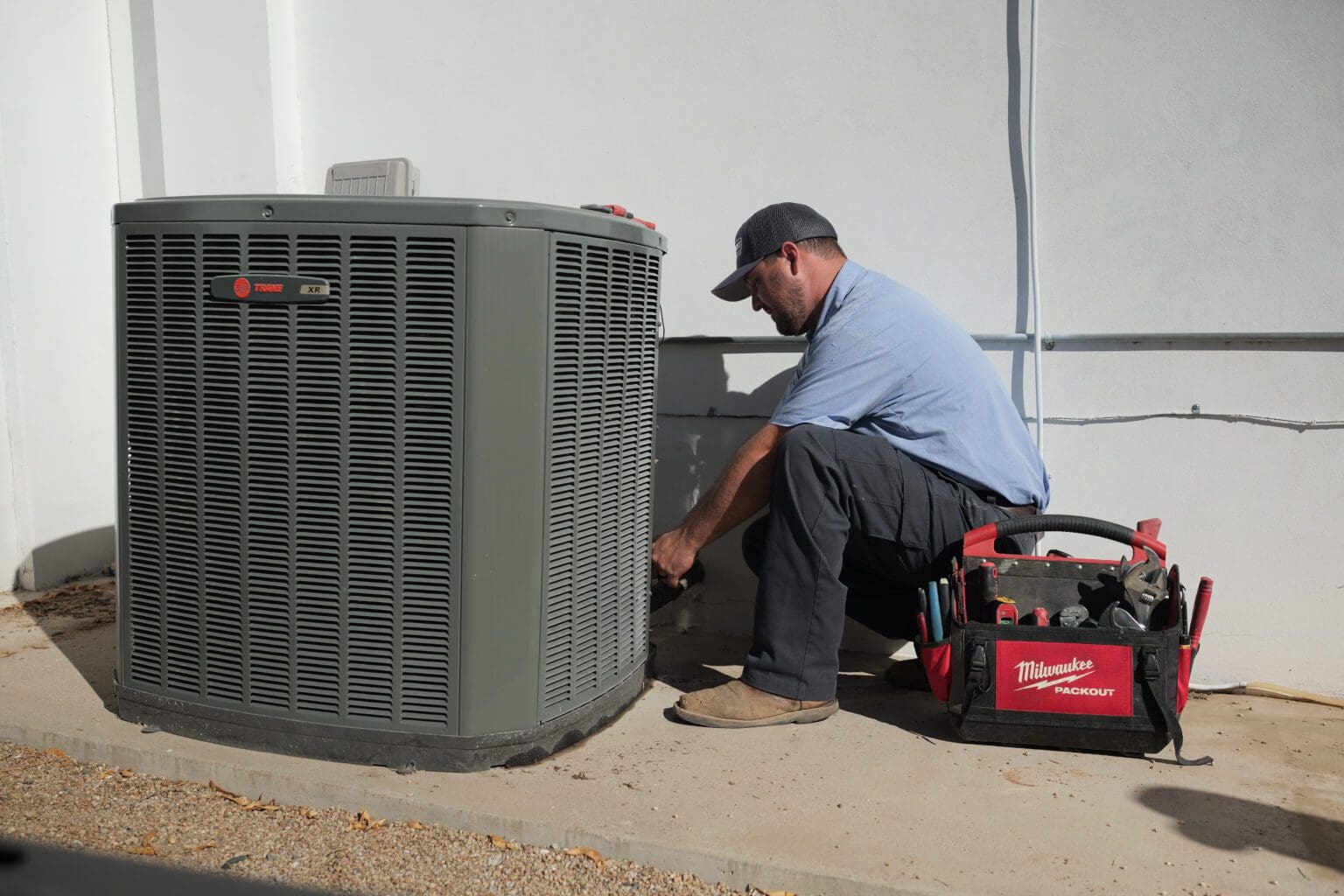
Loads shift across microclimates. Homes near Camelback Mountain get better evening shade but strong morning sun on east walls. Properties west of the 51 in North Mountain see wind patterns that cool evenings faster. Ahwatukee sits near South Mountain Park with slope exposures and reflected heat from rock faces. Manual J keeps those changes in mind with orientation and shading data. That protects comfort and kWh use across the 85016, 85018, 85021, 85032, 85044, 85050, and 85085 zip codes.
Why older AC units fight uphill in Phoenix
Aging equipment loses capacity and draws more amps during peak hours. Coil fin damage, low airflow, and refrigerant charge drift all tax the compressor. Units charged with R-22 face expensive service and lower seasonal performance. Frequent repairs often hide a sizing or airflow flaw from a past install. Manual J exposes the load, and a proper HVAC replacement with SEER2 compliant equipment resets performance. That is how high utility bills come down and stay down over time.
Commercial considerations along the I-10 and Central City corridors
Retail and office spaces in Phoenix face door traffic, lighting heat, and roof heat soak. Packaged rooftop units near warehouses and showrooms need correct tonnage, economizer setups, and controls tuned for occupied hours. Manual J at the suite level feeds Manual S and duct layout so the rooftop unit reaches setpoint without blasting air and short cycling. A multi-zone design with variable speed supply fans can tame hot zones near storefront glass while saving power during shoulder hours.
Utility bills and the math of right-sizing
Oversized systems start and stop. Each start pulls high current. Short runs never let the evaporator coil stabilize. That hurts sensible capacity when the sun hits west windows in Biltmore or Arcadia. Undersized systems run long at full blast and struggle to reach setpoint in 85032 or 85050 homes with poor attic insulation. Right-sized systems under Manual J glide through the day at moderate speed. They draw fewer amps, remove more moisture, and reduce demand spikes. Electric bills reflect that in the first summer after a correct installation.
Day & Night reviews energy use with clients six to twelve months after install when data spans seasons. The team compares runtime hours, cycling rates, and thermostat setpoints. Most homes see noticeable savings with better comfort. Commercial spaces often see tighter temperature swings and longer intervals between service calls due to lower stress on compressors and blowers.
Neighborhood ground truth: how Phoenix blocks shape the load
In Arcadia, lot scale and mature trees change shading. Many homes have additions or casitas that never received duct sizing updates. A ductless mini-split can handle those spaces without overdriving the main system. In Desert Ridge, HOA color palettes push darker roofing that raises heat intake. Proper attic insulation levels and baffle alignment become critical.
Near Phoenix Sky Harbor International Airport, aircraft noise encourages tighter windows. Lower infiltration reduces peak loads. Manual J reflects that and often drops a half ton from guess-based rules. In Moon Valley, hillside exposure and evening wind movement change night setbacks. The model will lean more on variable speed staging to stretch comfort through sunset. In Ahwatukee, solar gain on sloped lots and courtyard designs needs accurate shading entries to avoid oversizing.
Brands, warranties, and long-term ownership
Day & Night is a factory-authorized installer for top brands used across Phoenix and Maricopa County. The team works with Trane, Carrier, Lennox, Goodman, Rheem, York, American Standard, Daikin, and Mitsubishi Electric. The product line covers central air conditioners, heat pumps, packaged rooftop units, hybrid HVAC systems, and zoned cooling systems. Equipment is selected to meet or exceed SEER2 standards and match the Manual J and Manual S outcome.
A 10-year warranty is standard on many systems when installed and registered per manufacturer rules. Flexible financing helps owners in 85021 or 85044 move forward before a mid-July failure. Service agreements keep coils clean, filters changed, and drain lines clear. These steps reduce static pressure creep and keep seasonal efficiency close to lab ratings.
How the process flows for ac installation service Phoenix homeowners can trust
It starts with a site visit and a load study. The team collects measurements, runs a Manual J, and shares the findings. Options include central air replacements, high-efficiency heat pumps, or selective mini-split additions. Manual S matches equipment. Manual D details airflow improvements, return sizing, and balancing. Installers replace the air handler or rooftop unit, set the condenser on a proper pad or curb, connect copper line sets, set traps and drains, and wire a smart thermostat if selected. The crew then measures static pressure, verifies cfm, checks superheat or subcooling per brand tables, and documents delta-T at peak load times.
The result is a system that fits the building and its microclimate. Short cycles end. Hot rooms cool. Utility bills settle. Repairs drop off. The building breathes better air with a coil that runs long enough to clean and dehumidify.
Quick local adjustments Day & Night makes after a Manual J
Homes and commercial spaces across Phoenix benefit from small, targeted changes proven in the field:
- Upgrade returns in tight hallway ceilings to lower static and support variable speed blower control
- Add shade screens or films on west glass in Arcadia and Biltmore to shave afternoon sensible load
- Seal and insulate attic ducts above garages in 85032 and 85050 to control heat gain
- Tune smart thermostat staging for APS and SRP peak periods to avoid demand spikes
- Replace compromised line sets and set correct traps to prevent flooding during monsoon humidity
These steps reflect thousands of Phoenix service calls. They also protect the Manual J promise. The system runs as designed in heat, dust, and sudden humidity surges.
Why this approach ranks in the Map Pack and performs on the roof
Local relevance shows up in Day & Night’s records and the way the team speaks about homes from Ahwatukee to North Phoenix. Zip codes 85016, 85018, 85021, 85032, 85044, 85050, and 85085 are active every week. Crews work near Camelback Mountain, the Desert Botanical Garden, and South Mountain Park. They replace aging AC units in older blocks and deliver commercial HVAC replacement in shopping plazas near Chase Field. The work is licensed, bonded, and insured under Arizona ROC #133378. NATE-certified installers and SEER2 compliance appear on every proposal. Manual J load calculations back every ac installation service Phoenix clients order. That is the standard, not an option.
These signals help owners vet providers and help searchers find the right team. They also point to how the system will run when the temperature board at Phoenix Sky Harbor climbs above 110°F.
A balanced view: where rules of thumb break and where experience saves the day
Rules of thumb can start a conversation, but they cannot finish it in Phoenix. The square-foot-per-ton shortcut ignores windows, attic conditions, ducts, and humidity waves. It may land close in a tight, shaded, single-story with white tile roofing and R-49 insulation. It fails in a two-story with bonus rooms and west-facing glass. Manual J nails the load. Experience fills in the details that software cannot see, such as radiant heat off block walls at 5 p.m., a return grille buried by a tall dresser, or an attic hatch without weatherstripping. Day & Night technicians catch those items and adjust design or installation accordingly.
There are edge cases. Historic homes with original single-pane windows might keep a slightly higher capacity to smooth late-day spikes, paired with a variable speed compressor. Homes with future window and insulation upgrades may size to the improved envelope and live with longer runtime until the upgrades complete. Commercial tenant improvements may step capacity while stages are added in phases. The point remains the same. The load comes first. The equipment follows. The ductwork supports both.
Service coverage across Maricopa County
Day & Night serves Phoenix, Scottsdale, Tempe, Mesa, Glendale, Peoria, Chandler, and Gilbert. Teams move daily through Arcadia, Biltmore, Desert Ridge, Moon Valley, Paradise Valley Village, and North Mountain. Zip codes include 85001, 85016, 85018, 85021, 85032, 85044, 85050, and 85085. That coverage brings consistent practice and fast help on peak days. Crews know the drive paths to rooftops, HOA preferences on condenser pads, and city inspection schedules during summer rush.
What owners gain from a Manual J-backed HVAC replacement
A quieter home. Longer, steadier cycles that remove humidity. Rooms that match the thermostat within a degree when the sun beats down. Lower monthly bills and fewer repair calls. A system that lasts longer because it runs at the right load with clean airflow. These are the gains Phoenix owners care about. They start with one action. Measure the load and size the system right.
Day & Night Air Conditioning, Heating & Plumbing 3669 E La Salle St,
Phoenix, AZ 85040 (602) 584-7758 www.dayandnightair.com AZ Licenses: ROC335883 | ROC335884 Google Maps | Facebook | Instagram | LinkedIn